KEY TAKEAWAYS
- Best overall for globally distributed teams: Tequipy. Devices are sourced in-country at retail price across 180+ countries, and one platform covers the whole lifecycle. The same services run on devices bought from another vendor. There is no contract and billing is per order, so you can send one hire in your hardest country to Tequipy and leave your current setup running.
- Best for deep HRIS automation: Workwize. It lists 100+ HRIS integrations, and its site footer shows SOC 2 Type II and ISO 27001 badges. Basic needs 150 users, and smaller teams have to ask sales. One buyer reported a 30% hardware markup on top of the per-seat fee.
- Best when Deel already runs your payroll: Deel IT (formerly Hofy). The genuine draw is having devices, payroll, and EOR in one portal. Buyers pay for it with a store fee they put at 25%, which they say runs higher once you compare identical configurations. Bundles start at $49 per user per month (Starter).
- Best for US and Latin America hiring: GroWrk. Its free A La Carte tier is the same pay-per-order deal an Allwhere team already has. HRIS sync, zero-touch MDM, and buy-back sit in the paid Flex tier, on a 12-month agreement. Hardware prices run well above buying direct.
- Teams searching for Allwhere alternatives usually name one of two triggers: coverage that stops at the edge of its 54 countries, or a service scope that handles only part of the device lifecycle and forces a second vendor.
The search for Allwhere alternatives usually starts when a hiring map outgrows the vendor. Allwhere's own global coverage page covers 54 countries, with no MENA, no Africa, and almost none of Asia beyond India, Japan and the Philippines. One reviewer on r/sysadmin described the gap mid-contract: "We were told they can operate globally but after we signed the contract and submitted a request, we were told it would not be possible to ship there."
This guide compares six Allwhere competitors on what decides a switch: verifiable coverage, like-for-like cost, delivery evidence, and how much of the lifecycle each vendor takes on.
How We Selected the Top Allwhere Alternatives
Allwhere gets its commercial basics right: no platform fee, no minimums, pay-per-order billing. An alternative that asks for a heavy subscription has to earn the difference elsewhere. We graded on five things:
- Verifiable coverage. Where has the vendor actually delivered, according to reviews and case studies rather than a marketing page?
- Total cost. Published fees, buyer-reported markups, and a standard configuration's price once every cross-border procurement fee is counted.
- Delivery evidence. SLA claims held up against what reviewers report.
- Lifecycle completeness. Whether one vendor can procure, enroll, retrieve, store, and resell, or whether you would run two.
- Proof. Review volume and recency, named customers, and what buyers told us in evaluations.
Sources are public review platforms (G2, Trustpilot, Capterra, Reddit), vendor pricing pages fetched live, and first-hand reports from teams that evaluated these vendors. Every review score below is dated as of October 2026 and linked.
Best 6 Allwhere Alternatives Compared for 2026
| Tool | Best For | Standout Feature | Starting Price | Ratings |
|---|---|---|---|---|
| Tequipy | Globally distributed teams, any fleet size | Full lifecycle at retail price in 180+ countries | free for up to 100 devices, then $99/month flat | 4.8 from 3 on G2 |
| Workwize | Deep HRIS automation (150-user minimum on Basic) | Large HRIS integration catalog | $8 per seat (+$540 platform fee), Basic | 4.2 from 23 on G2 |
| GroWrk | US and LATAM hiring | Free A La Carte tier, with the full lifecycle on paid Flex | Free on A La Carte, paid on Flex | 4.4 from 36 on G2 |
| Deel IT | Teams already on Deel's HR stack | Devices in the same portal as payroll and EOR | from $49 per user per month (Starter) | 3.3 from 30 on Trustpilot |
| Firstbase | Enterprise leasing, US/UK/EU heavy | 24 to 36-month hardware leasing | $27,500 a year, 100 users (AWS Marketplace) | 4.7 from 51 on G2 |
| Quipteams | LATAM-heavy teams | No-login guest quote requests | Pay-per-order | 5.0 from 32 on G2 |
Each section below gives that vendor's pricing, strengths, gaps, and dated review scores. Tequipy leads on the reason most teams leave Allwhere: coverage in every country you hire in. Allwhere covers 54 countries.
Tequipy: Best for Globally Distributed Teams
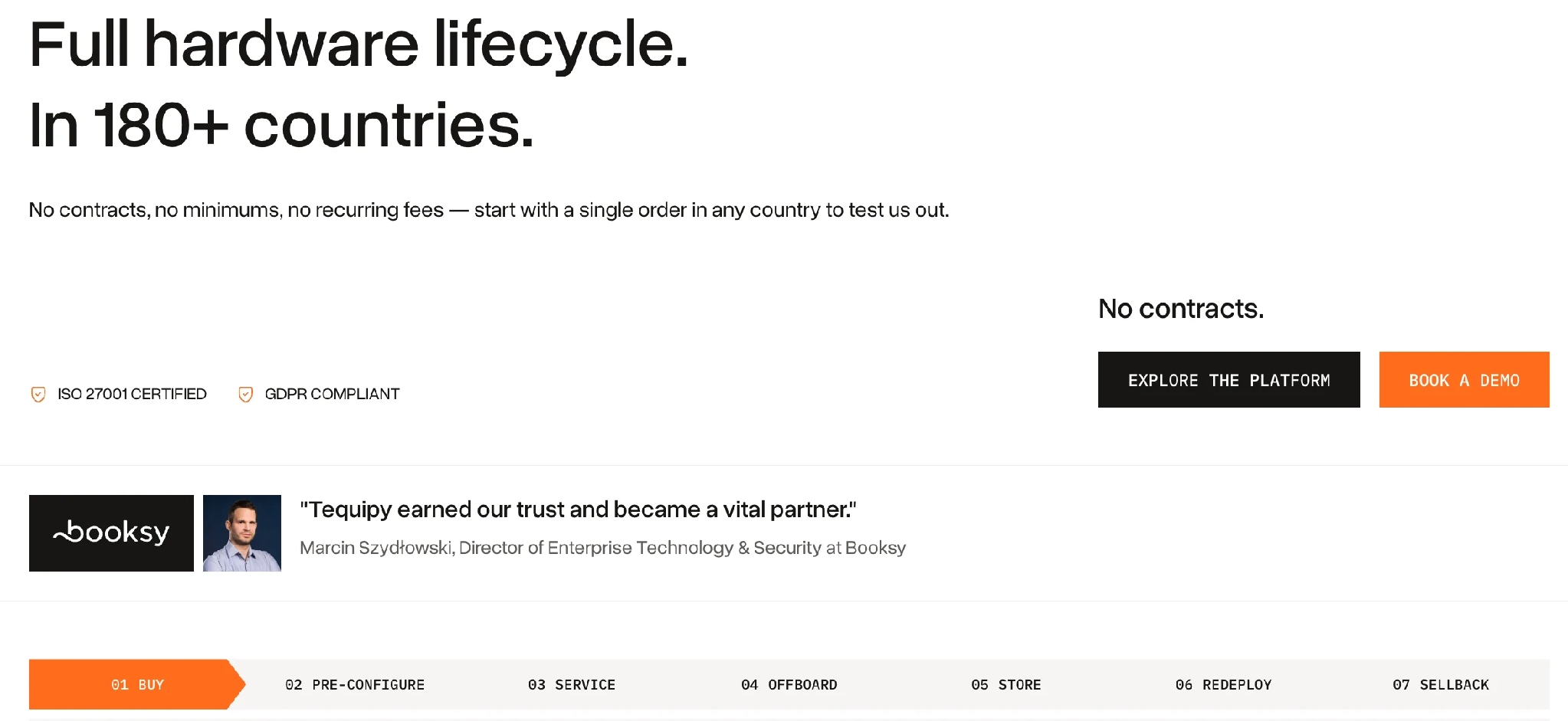
The team behind Tequipy ran IT at Revolut while it grew from 100 employees to 5,000 across 17 offices, without losing a laptop. They built Tequipy to do for globally distributed teams what Allwhere does for US-centred ones, across 180+ countries instead of 54 countries. Every order follows the same path: source the device locally, enroll it in your MDM, deliver it before day one, then handle retrieval and resale.
The terms will feel familiar to Allwhere customers: no platform lock-in, no minimums, pay for what you use. What changes is Tequipy's reach and how much of the lifecycle it carries.
Tequipy Key Features
In-Country Sourcing Across 180+ Countries
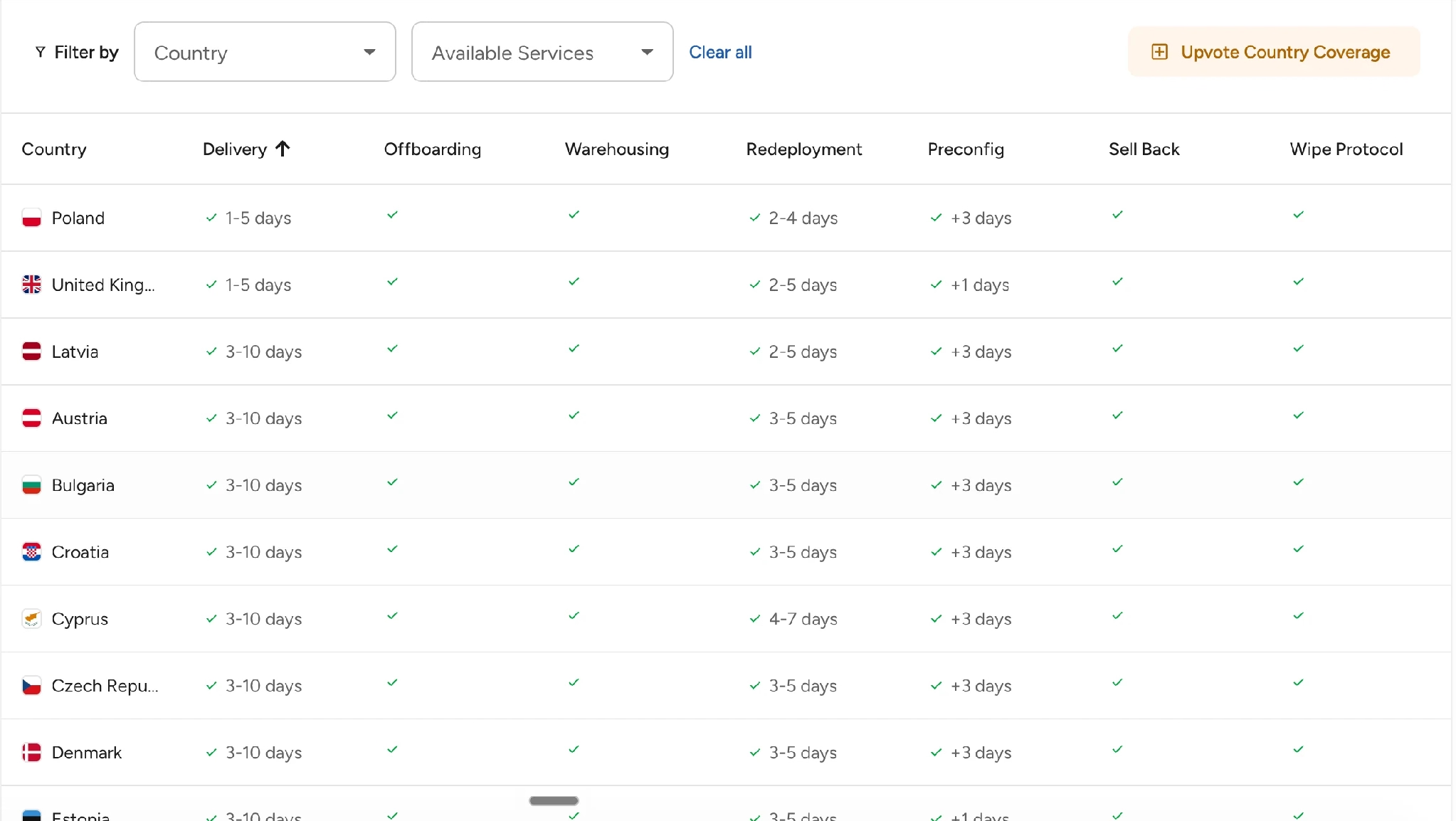
Every order in Tequipy's global procurement service is fulfilled by one of 600+ authorized resellers in the employee's own country, so devices skip customs and import duties, though EU orders may cross open borders. Delivery averages 3 business days worldwide, with a 10-day maximum. Booksy had people starting in the Philippines and Colombia, and its case study records 99% of equipment arriving before the start date. Booksy opened the relationship with a deliberate test in Latin America, the hardest region on its hiring map at the time.
The Whole Lifecycle, Including Devices Bought Elsewhere
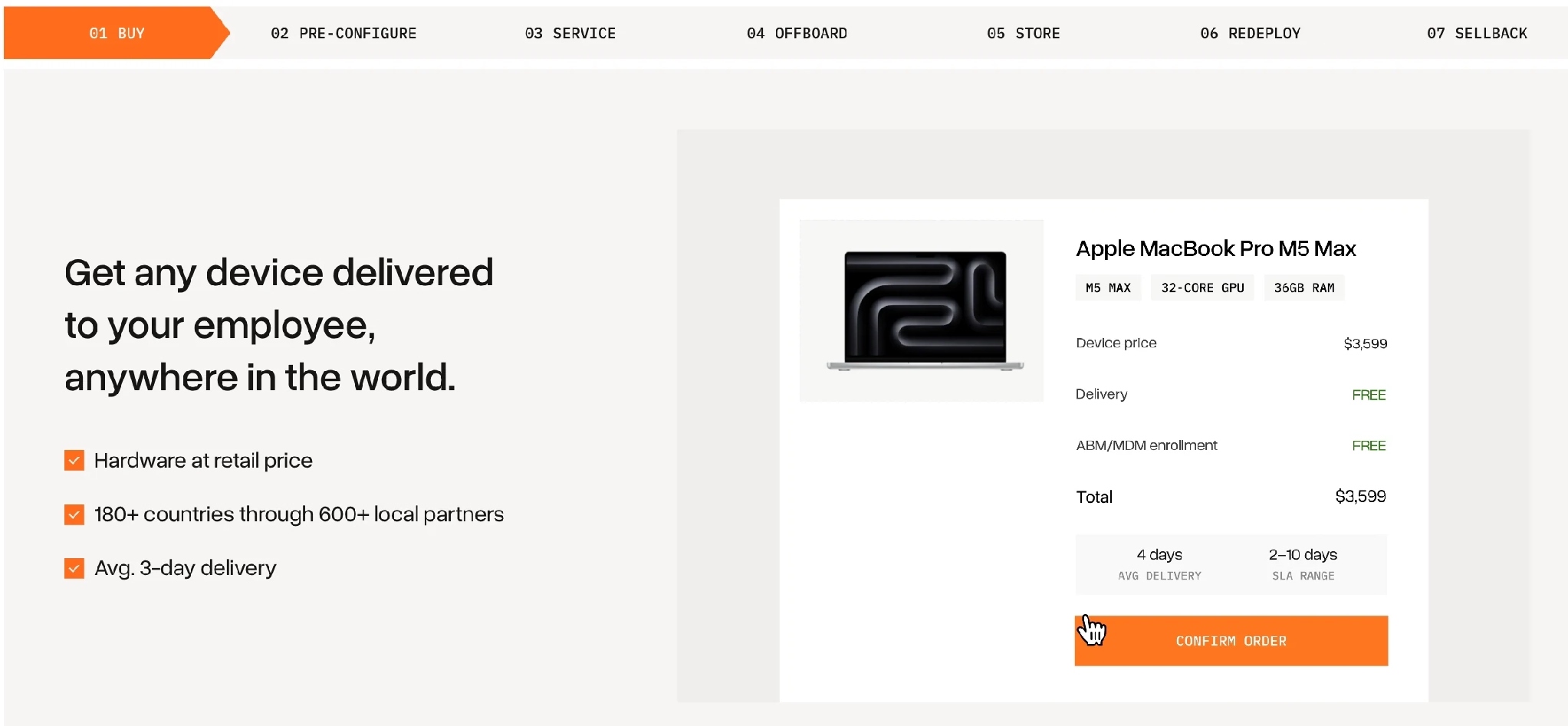
Procurement, MDM pre-enrollment via zero-touch deployment, repairs, offboarding, storage, redeployment, and sellback run from one dashboard, and every service works on hardware you never bought through Tequipy. A team using Allwhere only for retrievals or procurement can hand the rest to Tequipy without repurchasing anything.
RemoFirst's case study shows 100% of company-issued devices recovered after offboarding across 30 countries, Colombia and Kazakhstan included. Connecteam's case study covers the switch itself: Connecteam's previous global vendor kept failing in Australia, and moving to Tequipy saved its IT team about 5 hours per order.
Retail Pricing and a Slack Channel Instead of a Ticket Queue
Hardware is billed at recommended retail price, the same number the local Apple Store shows. Delivery and MDM enrollment are included in that price, and service fees are flat and published. TapTap Send's case study credits that published pricing alongside $6,500 in average monthly savings, after the team consolidated three separate procurement processes into one.
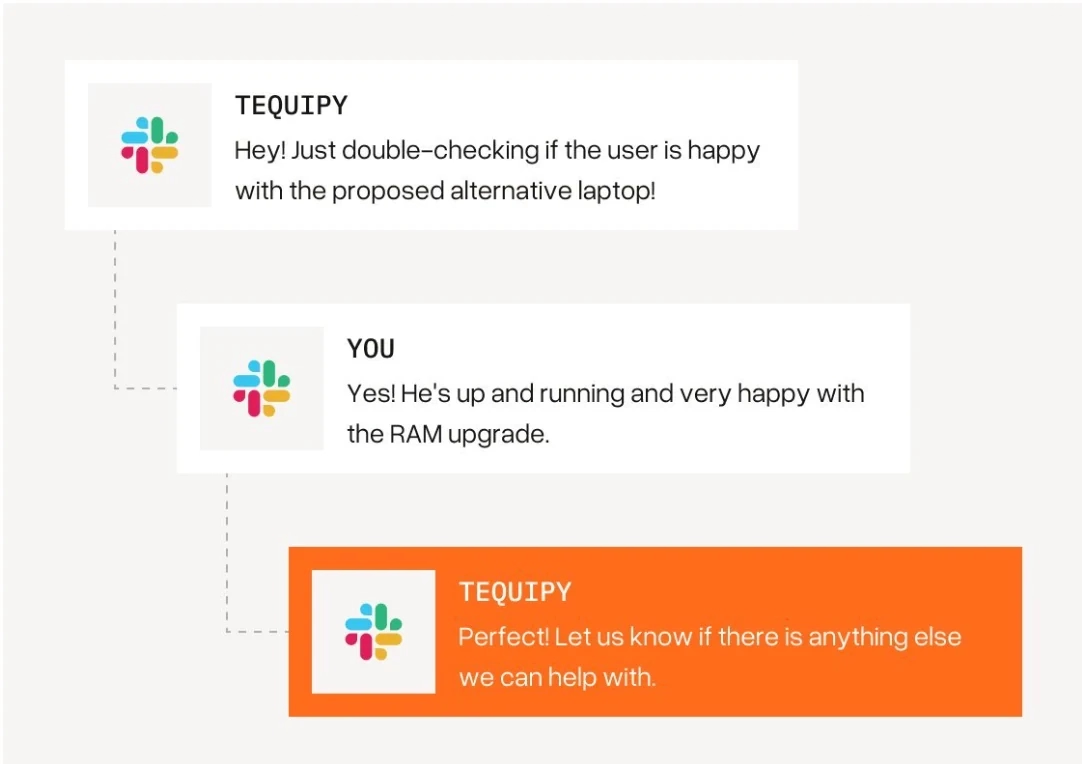
Support runs through a dedicated Slack channel per customer, staffed by the people who handle the orders. Gigs' case study records 100+ hours saved per month with no extra IT hires.
Tequipy Pricing
| Item | Price |
|---|---|
| Platform | Free for up to 100 devices, then $99/month flat |
| HRIS integration (optional add-on) | $199/month |
| Hardware | Recommended retail price, no markup |
| Delivery + MDM enrollment | Included in device price |
| Offboarding (retrieval + wipe) | $70 to $150 per device |
| Storage | $12/device/month |
| Redeployment | $70 to $150 per device |
| Contracts / minimums | None |
Cycling a returned device back into service costs about $180 to $240 all-in, against $1,500 to $2,500 for buying new.
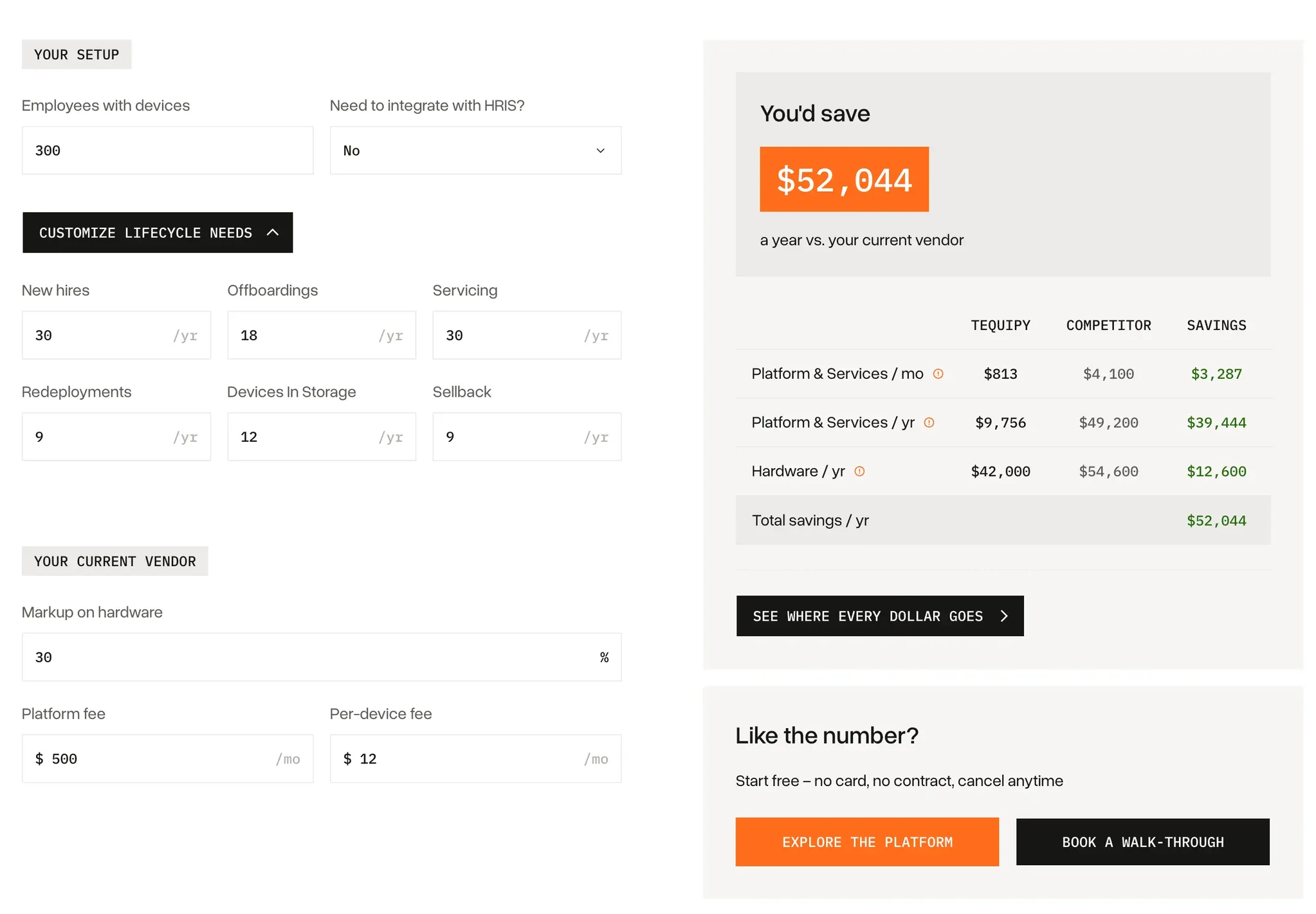
Allwhere passes devices through at vendor cost and adds a 4% service fee to every transaction (October 2026). If its vendor cost matches retail, 10 laptops a year at $1,400 each come to $14,560 with the fee. In our pricing calculator, the same 10 laptops cost $14,000 at retail on Tequipy, with no fee added. If your Allwhere vendor price is below retail, the gap is smaller. Enter what you order from Allwhere in a year and see for yourself.
Where Tequipy Shines
- Coverage that holds after signing: 180+ countries served through in-country resellers. The delivery proof concentrates in the markets others skip, including the Philippines, Colombia, Kazakhstan, the UAE, and wartime Ukraine.
- Services that run on your existing fleet: every lifecycle service works on hardware you bought elsewhere, and a single order needs no contract. Send one hire in your hardest country to Tequipy, leave Allwhere handling the rest, and keep whichever vendor performs better.
- Pricing you can check: retail-price hardware and published service fees.
Where Tequipy Falls Short
- Occasional invoice errors and model shortages: both come from Tequipy's own enterprise reviewer on G2, who checks invoices for mistakes and sometimes orders an alternative laptop model. Ask to see an itemised invoice from an existing customer before you sign anything.
- Fewer native HRIS integrations: built-in sync covers HiBob, BambooHR, and Workday as a $199/month add-on, and everything else connects through the REST API. If your stack needs a specific connector, ask the team. They often build one for a particular setup.
- SOC 2 still in progress: Tequipy holds ISO 27001 certification, and penetration test reports are available today. If a SOC 2 report is a procurement gate, ask the team where the audit currently stands.
Tequipy Customer Reviews
As of October 2026, Tequipy's G2 profile holds three reviews averaging 4.8, the newest from August 2026. Read who wrote them rather than the average: two work at enterprises above 1,000 employees, the third at a mid-market company, and none at a small business.
An IT lead at an enterprise over 1,000 employees writes that "it really stands out that I don't need to have a local IT department in every country we operate in", naming Colombia and the Philippines (July 2026).
A reviewer in financial services at similar size lists what one account now covers: buying, provisioning, repairs, offboarding, storage, redeployment and buyback "in a single platform, instead of forcing IT teams to coordinate across multiple vendors". That review was posted in July 2026 through a G2 invite. A mid-market IT manager says the platform "looks the best out of other ITAM provider platforms that I've seen" (August 2026).
"Working with Tequipy has been a strategic advantage for our global operations. We initially tested them in Latin America, a region where we faced logistical challenges. They managed it perfectly, which gave us the confidence to start using their services for other geographies as well." Marcin Szydlowski, Director of Enterprise Technology and Security, in Booksy's case study.
Khachik Yenigbaryan, IT Operations Engineer at Tabby, gave Tequipy a testimonial that has never been published as a case study: "Every time we had an urgent case, Tequipy came through. No missed start dates, no excuses."
Who Tequipy Is Best For
- Teams whose hiring map extends beyond Allwhere's 54 countries, or will within the next year. Coverage is the single clearest reason to move.
- IT and People Ops teams that want one accountable vendor from procurement through resale.
- Fleets of any size, from 50 devices to 5,000. The platform is free up to 100 devices, then $99 a month flat, with no per-seat charge and no seat minimum, so the bill does not climb as headcount does. Booksy runs 500+ people and 800+ assets on Tequipy, per its published case study.
- Anyone who prefers to test before deciding: one order, one difficult country, no contract signed. GroWrk and Quipteams take single orders too, but Tequipy has delivery evidence where the test usually fails.
{{cta-primary}}
Workwize: Best for Deep HRIS and MDM Automation
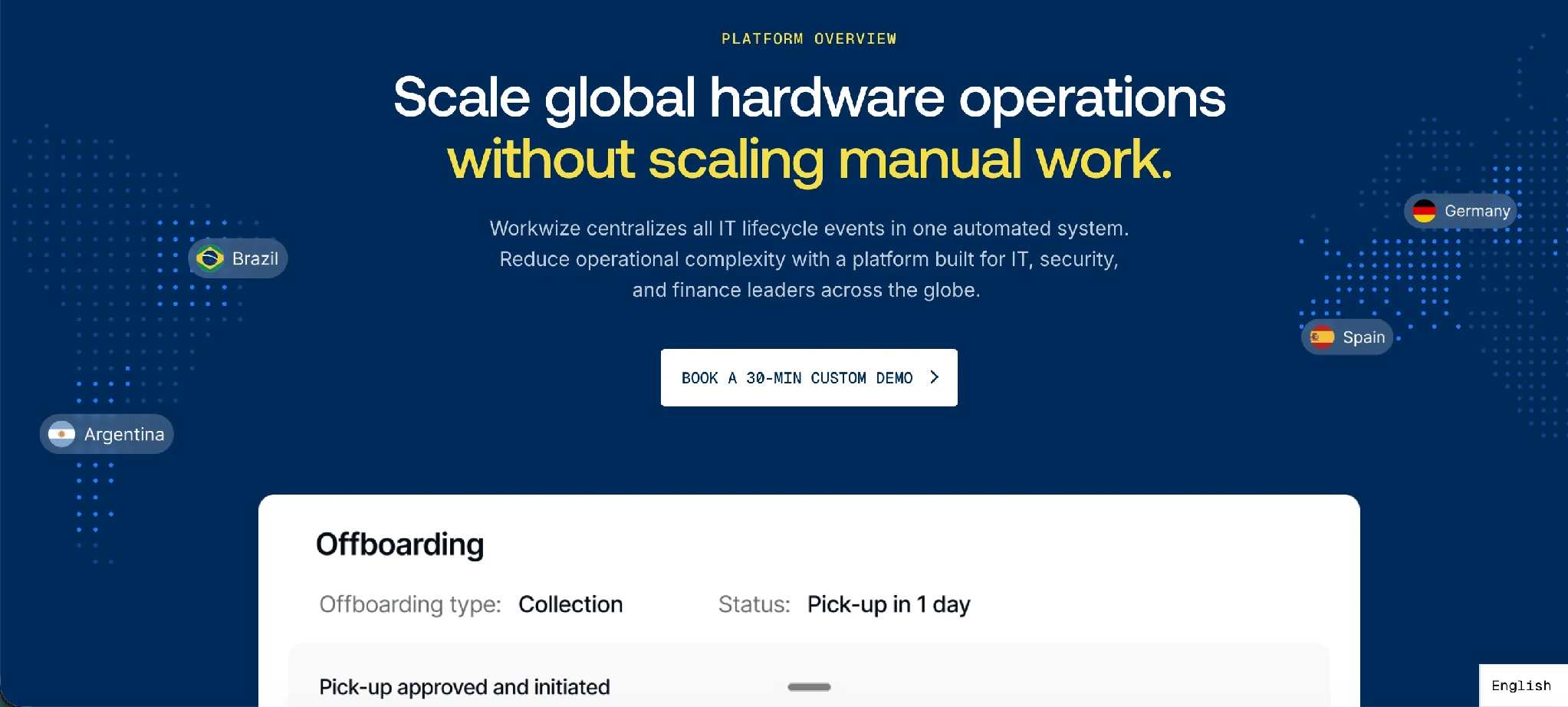
As of October 2026, Workwize Basic costs $8 per seat plus a $540 platform fee, and G2 shows 4.2 from 23 reviews. Automation depth is where Workwize clearly outruns Allwhere. Allwhere lists HRIS and MDM integrations too, but public evidence that its automations work is thin. Workwize reviewers repeatedly describe hire-to-retire device flows that run without IT touching them. Workwize charges a subscription for it; Allwhere does not.
Key Features
Workwize lists 100+ HRIS integrations (HiBob, Workday, Personio, Okta, and more) wired into device workflows: a new starter in the HRIS triggers a configured shipment, a leaver triggers a pickup. One G2 reviewer put it plainly: "We've hooked up HiBob and Jamf to Workwize, and now everything just works." Its FAQ names 14 warehouse locations. Devices can be bought or rented, and its site footer shows SOC 2 Type II and ISO 27001.
Pricing
Workwize's own comparison page gives the Basic price below. Its pricing page puts a 150-user minimum on the Basic tier and sorts tiers by how many regions you cover, at 3, 5, or unlimited.
| Item | Price |
|---|---|
| Platform | $8 per seat (+$540 platform fee) on Basic, per Workwize's own page |
| Minimum | 150 users (Basic tier) |
| Hardware | Not published. One buyer reported a 30% markup. |
| Contract | Terms not published. No single-order pilot is offered. |
The markup figure comes from a Reddit thread on Workwize, where a buyer reported paying "30% markup on products Workwize sold" alongside platform fees. At 150 seats, reading both Basic fees as monthly, we estimate $20,880 a year before any hardware ships.
Where Workwize Shines
- Automation breadth: 100+ HRIS integrations, per its pricing page, and the theme its positive reviews return to most.
- Vendor consolidation: reviewers on G2 describe replacing several regional suppliers with one platform and one audit trail.
- Compliance today: SOC 2 Type II and ISO 27001 are already in hand, which matters for teams with hard certification checklists.
Where Workwize Falls Short
- The 150-seat requirement: Workwize sets it on the Basic tier, and its FAQ says smaller teams can sometimes benefit if fully remote. There is no single-order pilot to trial the service either.
- Delivery outside the US: a two-star G2 review from December 2024 warns: "If you are trying to use these services in the EU, Australia, India, or South America you should wait until their product and processes are more matured."
- Opaque totals: a team that evaluated Workwize told us the pricing was "very difficult to understand and fluctuated sporadically."
Reviews
Workwize's public score base is modest for a company that raised a $13M Series A: 23 reviews on G2 averaging 4.2 and 5 on Trustpilot averaging 3.0 (down from 11 in July 2026), both as of October 2026, plus 17 on Capterra at 4.4. Workwize invited all 14 G2 reviews from September 2026 and every Capterra review. Praise clusters on integrations and account reps; complaints cluster on delivery delays and billing.
Best For
- Teams that prioritize automation depth over cost, hire mostly near its 14 warehouse locations, and can clear the 150-seat minimum. Under that line, ask sales whether your team qualifies.
GroWrk: Best for US and Latin America Hiring
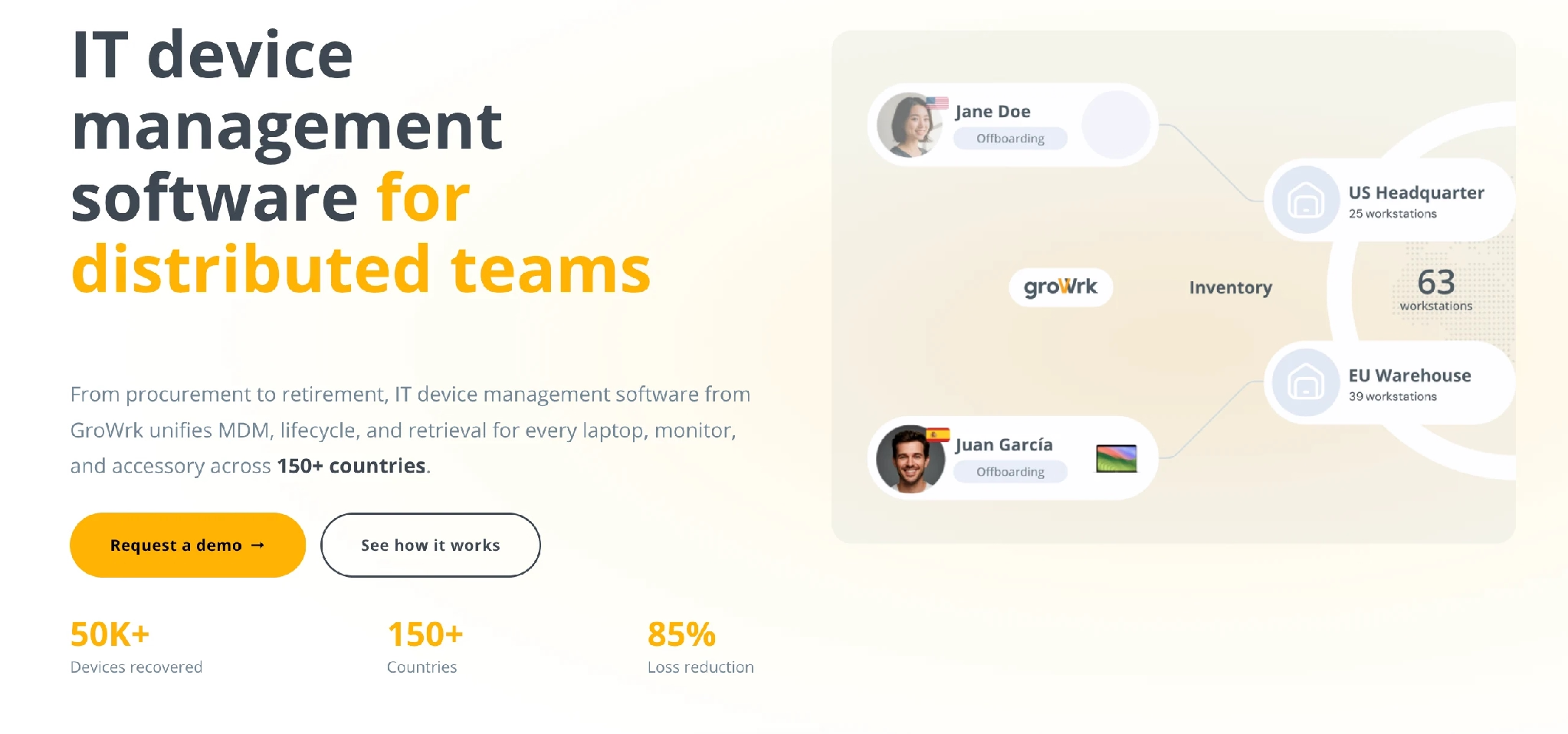
GroWrk overlaps with Allwhere more than any other vendor here: Americas-first execution, a no-fee entry tier, and pay-per-order billing. Tequipy bills the same way. GroWrk claims more reach than Allwhere, 150+ countries on its FAQ, and it puts more of the lifecycle behind a paywall.
Key Features
The free A La Carte tier covers procurement, retrieval, storage, and logistics on itemized billing with no contract. Tequipy's entry terms are the same. HRIS sync, zero-touch MDM, buy-back, multi-subsidiary support, and a dedicated account manager sit in the paid Flex tier. Flex agreements start at 12 months, per GroWrk's FAQ. Latin America is the documented strength: a G2 reviewer names Chile, Colombia, Brazil, Argentina and Uruguay as the countries where GroWrk performs.
Pricing
| Item | A La Carte | Flex |
|---|---|---|
| Platform fee | Free | from about $12,000/year per SelectHub's estimate |
| Hardware | 25 to 45% above direct prices per buyer reports | 25 to 45% above direct prices per buyer reports |
| Contract | None | 12-month initial agreement |
| HRIS sync + zero-touch MDM | Not included | Included |
Tiers per GroWrk's pricing page. A current GroWrk customer priced the same MacBook both ways for us: $1,700 to $1,800 buying direct, against a GroWrk quote of $2,500 to $2,600. That puts GroWrk roughly 40 to 45% above direct on that configuration. A G2 reviewer called buying through GroWrk "substantially more expensive (often 2-3 times more) than buying it yourself."
Where GroWrk Shines
- Latin America execution: more positive regional evidence than any other vendor in this comparison. A three-year customer on G2 praises the shared Slack channels and a CSM team that "always go out of their way to help."
- Familiar entry terms: A La Carte keeps the no-contract, pay-per-order model an Allwhere team already runs on. Tequipy and Quipteams sell on the same terms.
- End-of-life options: buy-back and disposal sit in the Flex tier, so resale value and certified disposal come from the same vendor that shipped the device.
Where GroWrk Falls Short
- Hardware cost: the markup evidence above is the most consistent complaint across G2, buyer evaluations, and r/sysadmin threads on pricing.
- Delivery beyond the Americas: a Trustpilot reviewer wrote in December 2025: "It's been more than month since I submitted my request, and they still can't deliver a laptop to a Central European country." A long-term customer separately told us one batch of shipments "took two months to get out the door."
- Paid Flex holds the lifecycle features: HRIS sync, zero-touch enrollment, and buy-back all sit in Flex. They are what would let GroWrk replace a second vendor.
Compare these trade-offs with GroWrk alternatives.
Reviews
GroWrk carries more public feedback than any other Americas-first vendor in this guide: 36 reviews on G2 at 4.4 and 15 on Trustpilot at 3.8, as of October 2026. Delays are the most repeated dislike on G2; support and the dashboard draw the most praise.
Best For
- Teams hiring mainly across the US and Latin America that will trade above-retail hardware for having regional logistics handled for them.
Deel IT: Best for Teams Already Running Deel
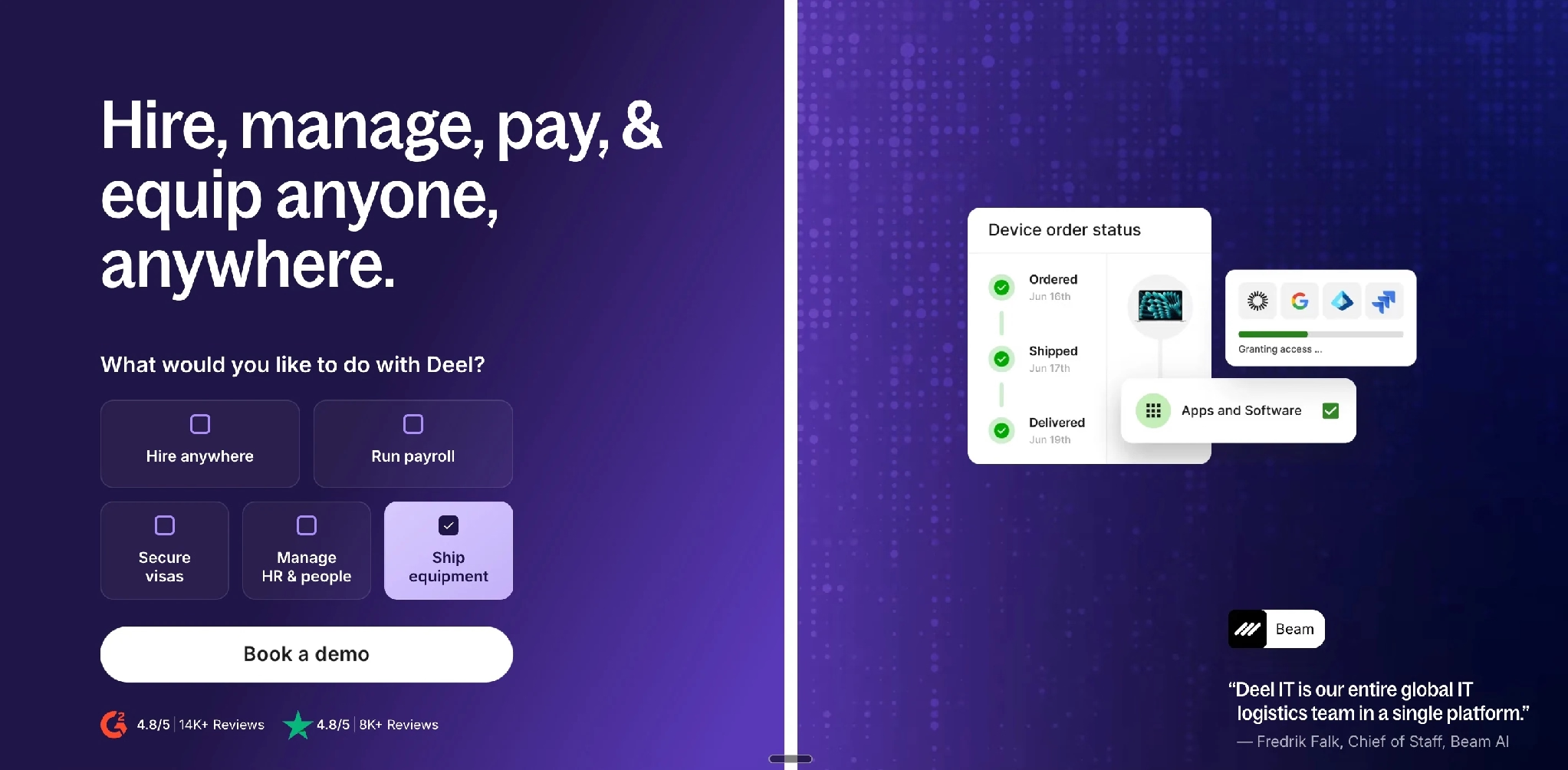
Deel IT Starter costs $49 per user per month as of October 2026. Deel IT offers one thing Allwhere cannot. If your payroll and EOR already live in Deel, adding devices to the same portal removes a vendor instead of adding one. Deel acquired Hofy in July 2024 to build exactly that.
Key Features
Device procurement across a claimed 130+ countries, MDM enrollment, retrievals, and disposal all run in the Deel dashboard, beside contracts and payroll. An employment event can trigger a device action automatically. Devices can be bought or leased, and leases run 12 or 24 months, extendable up to 48, with six months prepaid upfront. The consolidation stops at Deel's own stack. Every other vendor in the field of Deel IT alternatives sells devices with no payroll attached.
Pricing
Deel publishes per-user bundles from $49 per user per month (Starter, with MDM and endpoint protection). For 130 users on Starter, that is $76,440 a year before any hardware.
| Item | Price |
|---|---|
| Platform | from $49 per user per month (Starter, with MDM and endpoint protection) |
| Hardware purchase fee | US retail price plus a store fee, which customers put at 25% |
| Lifecycle services | Device lifecycle management, included in Starter |
| Leasing | 12 or 24 months, extendable up to 48, with 6 months prepaid upfront |
The purchase fee comes from a Trustpilot review by a 39-person UK company: "Hofy charge a flat 25% fee for any purchase on top of the price of the laptop." A team that evaluated Deel IT told us the real gap was wider, closer to 40 to 45% once they compared identical configurations.
Where Deel IT Shines
- One portal for people and hardware: onboarding, payroll, and the laptop live in the same system.
- Enterprise security posture: SOC and ISO 27001 certifications across the Deel platform, with AES-256 encryption on data at rest.
- Backing: Deel's scale means the product is funded and iterating quickly.
Where Deel IT Falls Short
- Costs stack: a store fee on the hardware and a per-user bundle fee bill separately. One current customer told us they could not leave mid-term because "we technically have left over money on the deal."
- Service decline reported since the acquisition: an October 2025 Trustpilot review reads: "Major downgrade since Deel's acquisition. Response times are painfully slow, and hardware pricing has skyrocketed."
- Country-level surprises: teams that evaluated Deel IT described gaps behind the headline country count, including Armenia not being covered and EU-to-UK shipments failing.
See how Hofy alternatives compare on pricing and service.
Reviews
The G2 number here covers far more than the device business. Deel IT's G2 profile shows 290 reviews as of October 2026, and most of them describe Deel's payroll products. The cleaner signal for device logistics is the Trustpilot page for hofy.com, now titled Deel IT, at 3.3 from 30 reviews as of October 2026.
Best For
- Teams already paying for Deel EOR or payroll that value a single vendor and portal enough to carry the purchase fee and a per-user bundle from $49 a month.
Firstbase: Best for Enterprise Leasing in Core Markets
In October 2026, Firstbase's AWS Starter Edition costs $27,500 for 12 months, and its G2 rating stood at 4.7 from 51 reviews. AppDirect acquired Firstbase in December 2024. Firstbase sells on different terms from Allwhere: annual platform contracts, hardware leasing, and enterprise account management. Its company page names Spotify and Cloudflare among its customers.
Key Features
Role-based equipment packages tied to Okta or the HRIS, zero-touch MDM enrollment, retrieval kits, and certified disposal with resale credits. Leasing runs 24 to 36 months. Firstbase's own warehouse capabilities doc splits the map in two. The US, UK, EU, and Canada warehouses accept equipment you bought elsewhere and take back the full range of devices. Every other region has to source through Firstbase, and generally returns laptops and docks only.
Pricing
Firstbase pricing starts at $27,500 for 12 months and 100 users on AWS Marketplace. Buyer evidence points to a committed annual contract. One Reddit commenter reported "they wanted $500k just to use their platform." A team that evaluated Firstbase told us the signing fee alone was quoted at $80,000, with $100,000 in prepaid service plans pushed on top.
| Item | Price |
|---|---|
| Platform | $27,500 a year for 100 users (AWS Marketplace) |
| Services | Prepaid commitments reported by buyers |
| Hardware | Purchase or 24 to 36-month lease; prices not published |
| Trial | None. Free AppDirect edition: US companies, up to 50 employees, no returns or services |
Leasing spreads cash flow, though it typically costs more over the term than buying the same device outright.
Where Firstbase Shines
- Retrieval in core markets: a G2 reviewer credits the return-kit process with having "cut my workload by 30-40%."
- Leasing as a cash-flow choice: the most mature hardware-as-a-service option in this comparison.
- Enterprise account management: single point of contact across regions is a recurring theme in its reviews.
Where Firstbase Falls Short
- Two-tier coverage: a December 2025 G2 review notes: "Because some countries are not currently supported, we have occasionally had to find alternative solutions, such as making local purchases." Outside the US, UK, EU, and Canada, the same capabilities doc rules out customer-shipped equipment.
- Entry cost: the Starter Edition costs $27,500 a year for 100 users on AWS Marketplace, and the buyer quotes above run far higher.
Reviews
Firstbase scores well, and its reviewers are mostly large companies: a G2 rating of 4.7 from 51 reviews, as of October 2026. Most of that praise comes from companies operating where Firstbase owns its warehouses. The recurring dislikes are shipping consistency and country coverage.
Best For
- Well-funded enterprises concentrated in the US, UK, and EU that specifically want leasing and white-glove account management, and can commit to an annual contract from $27,500.
Quipteams: Best for Latin America With a No-Login Quote Request
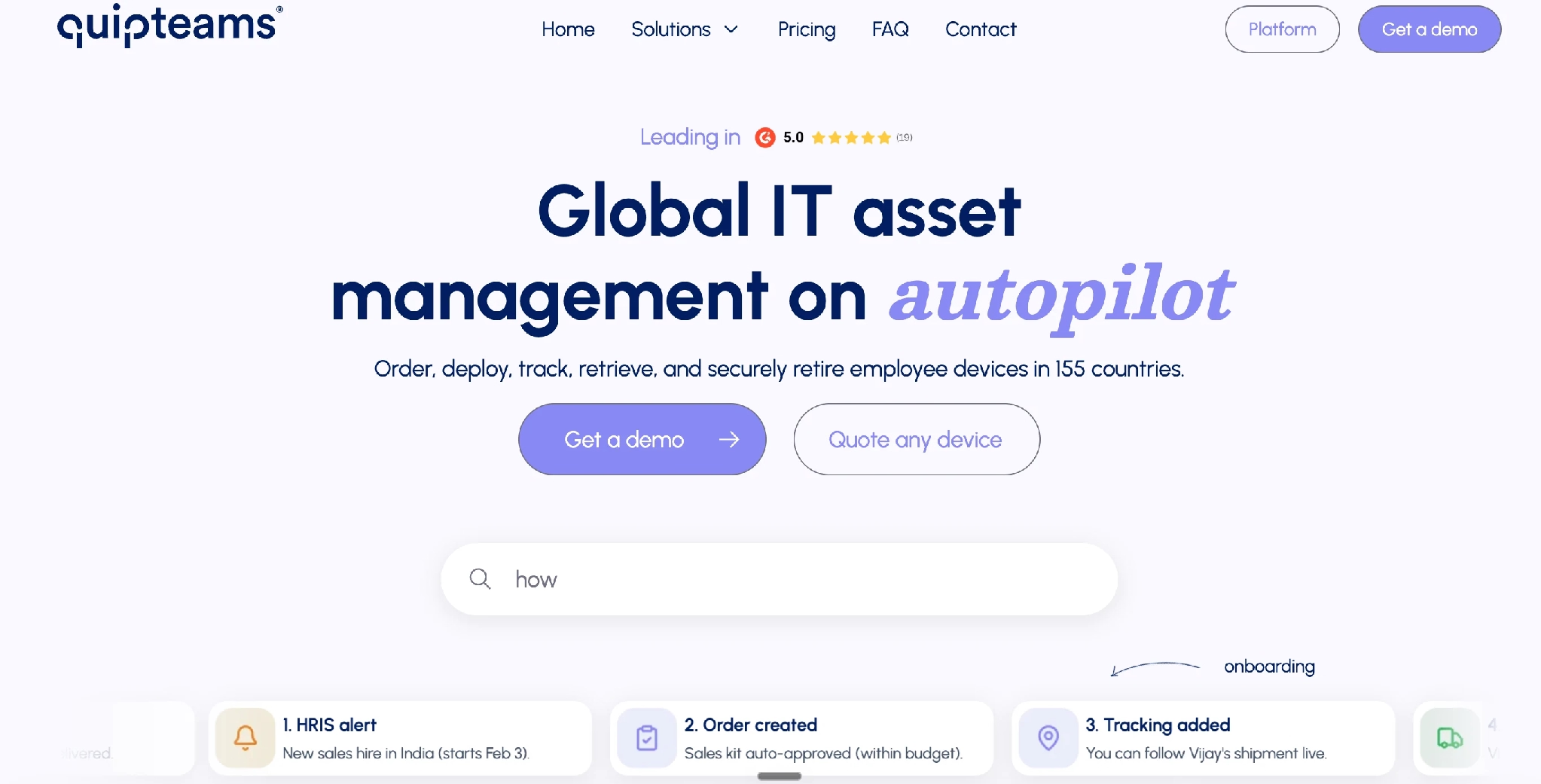
Quipteams makes the first quote easy: its guest tool takes a request with no login and no sales call, across the 155 countries its FAQ claims, and pricing is confirmed within 24 hours. Its pricing page commits to a $0 platform fee on every plan. Tequipy charges nothing for up to 100 devices, then $99 a month flat.
Key Features
In-country sourcing with no cross-border shipping, zero-touch enrollment before dispatch, role-based equipment kits, HRIS integrations, and a dedicated account manager, all included at zero platform cost. Tequipy charges $199 a month for the equivalent HRIS sync. The proof concentrates in Latin America. One G2 reviewer wrote that Quipteams "filled the Rippling gap in LATAM perfectly," and describes a Buenos Aires MacBook delivered within 24 hours of ordering.
Pricing
| Item | Price |
|---|---|
| Platform | $0 on all plans |
| Hardware | Local market price plus delivery, itemized quotes |
| Storage | Free for new devices bought through Quipteams. Retrieved devices start at $35 per device per month. |
| Contract | None |
Rates per Quipteams' published pricing page. Its $0 platform fee undercuts the $99 a month Tequipy charges above 100 devices. Neither vendor asks for a contract, so the comparison comes down to hardware. One caution there: a team that evaluated Quipteams told us fees on a single 16-inch laptop came to about $1,000. Run a like-for-like quote before you assume local market price means retail price.
Where Quipteams Shines
- No-login quote requests: no account and no sales call, with pricing confirmed within 24 hours.
- LATAM delivery speed: G2 reviewers describe 24-hour Buenos Aires delivery and consistent execution across Argentina, Brazil, Mexico, Chile, Colombia, and Peru.
- No contract and no minimums: the same terms Allwhere, Tequipy, and GroWrk's free tier offer, with an exit that costs nothing.
Where Quipteams Falls Short
- Thin evidence outside the Americas: no reviewer on its G2 profile describes a delivery in Africa, the Middle East, or Eastern Europe, so the 155-country claim is largely untested in public.
- No published ISO 27001 or SOC 2: a gap if security reviews gate your vendor choices.
- Storage fees on offboarded devices: a July 2025 G2 review flags that "they charge for keeping the equipment of offboarded users."
Reviews
The sample behind the score is small: 32 reviews put Quipteams at 5.0 on G2, and 3 put it at 3.3 on Trustpilot, as of October 2026. Nearly every G2 reviewer is describing work in the Americas, so read the 5.0 as regional evidence rather than global proof.
Best For
- Teams whose growth is concentrated in Latin America that want deeper regional execution than Allwhere delivers there, provided security certifications are not a gate.
Reasons to Consider an Allwhere Alternative
Allwhere reviews well in its core markets and its terms are buyer-friendly. The push to leave comes from four patterns in public reviews and first-hand buyer reports.
The Coverage List Ends Sooner Than Your Hiring Map
Allwhere's 54 countries cover the US, UK, EU, ANZ, parts of LATAM, India, the Philippines, and Japan (coming soon). MENA, Africa, and the CIS region are absent, and 15 of the 50 countries on its Beta Regions grid get procurement only, with no retrieval, deployment or storage. The r/sysadmin account quoted at the top shows how that plays out: a signed contract, a request, then news that shipping there was not possible. Tequipy was built for exactly that gap, with 180+ countries served through in-country resellers, so whether we can deliver does not change after signing.
Service Depth Concentrates in the US
Even satisfied customers describe a split. A team using Allwhere in the US and UK told us they were mostly satisfied, "but they offer significantly better coverage and service in the US." The vendor's lone Trustpilot review is a one-star account of retrieval couriers sent at least three times at unsuitable times without checking. If your headcount is mostly outside the US, the strongest part of the service is the part you use least.
It Covers Part of the Lifecycle, So Teams Run Two Vendors
A current Allwhere customer who had placed 23 orders across two months told us they keep a second platform running in parallel, because each vendor "can only do part of the job." Another team we spoke with used Allwhere for US retrievals and nothing else. A vendor covering one slice of procurement and offboarding leaves your team stitching the rest together.
Fees Sit in a Help-Centre Guide, Not on the Pricing Page
Allwhere's pricing page shows no numbers, but its public help-centre Pricing Guide lists devices at vendor cost, as one customer team confirmed, plus a 4% service fee on every transaction. Our Allwhere pricing article goes deeper. The guide may change, so still run a same-spec quote.
Tequipy keeps its rates in plain view: its pricing page prints the full rate card, so no buyer needs a custom quote from us.
Pro tip: send every finalist the same three-line request: your standard laptop configuration, your three hardest countries, and a request for the all-in landed price per device (hardware, delivery, MDM enrollment, and any order or service fee), plus a written delivery SLA for those exact countries. Vendors that source in-country can usually answer inside a day. Vendors quoting from a regional hub tend to reply with caveats, which say more than the brochure.
Where several patterns fit, a same-spec quote from each finalist settles it.
{{cta-primary}}
CONCLUSION
Final Word on Allwhere Alternatives
Allwhere still suits US-headquartered teams that hire inside its 54 countries, and its US retrieval service in particular. Once your hiring map runs past that list, or you tire of paying two vendors to cover one lifecycle, each alternative above fits a different case: Workwize for automation at scale, Deel IT for ecosystem consolidation, GroWrk and Quipteams for the Americas, Firstbase for enterprise leasing.
For globally distributed teams, Tequipy removes the coverage question: retail-price hardware in 180+ countries, and the whole lifecycle from procurement through laptop retrieval to resale. Those services also run on devices bought elsewhere. Neither Tequipy nor Allwhere asks for a contract before a first order, so the test costs one laptop. IT procurement services price the same laptop very differently once order fees and markups are counted. Pick your hardest country and get the quote.
What changed on October 15, 2026
- Allwhere: 54 countries; its Pricing Guide adds a 4% service fee.
- Prices as of October 2026: Workwize Basic $8 per seat plus a $540 platform fee, Deel IT from $49 per user monthly, Firstbase $27,500 a year on AWS.
- Quipteams: its guest tool takes no-login quote requests, priced within 24 hours.
- Reviews: new G2 counts for Workwize, Firstbase, Quipteams and Deel IT.
FAQ
Is Allwhere free to use?
Partly. The platform itself carries no subscription fee, and you pay per order and per service. Tequipy and Quipteams bill the same way. Allwhere's pricing page lists no rates, but its help-centre Pricing Guide adds a 4% service fee to every transaction.
Does Allwhere mark up hardware prices?
Only through a fee: per its published Pricing Guide, the device comes at vendor cost plus a 4% service fee on every transaction. One team using it confirmed no device markup. Request a same-spec quote and compare it against local retail before you commit either way.
Who is Allwhere actually best for?
US-headquartered companies hiring inside its 54 countries, especially teams leaning on its US retrieval service. The fit weakens as hiring expands into MENA, Africa, CIS markets, or most of Asia, none of which appear on that list.
Is Deel IT the same as Hofy?
Yes, largely. Deel acquired Hofy in July 2024 and rebranded it as Deel IT, folding device management into the Deel platform. Reviews on the old hofy.com Trustpilot profile now describe Deel IT.
Can I test an Allwhere alternative without switching?
Yes, in some cases. Tequipy, GroWrk's free A La Carte tier, and Quipteams' $0 platform plans all accept single pay-per-order purchases with no contract, so you can route one hire in a difficult country through a new vendor while Allwhere keeps handling the rest.

Keep your current setup.
Just test us on one order.
AUTHOR
Before Tequipy, Tomek ran IT at Revolut, scaling from 100 employees in 2 offices to 5,000 across 17. He built the system that kept every laptop accounted for, then founded Tequipy – a platform that handles IT equipment logistics for distributed teams across 180+ countries.
As CEO, he runs operations and covers the founder layer: strategy, product, and the company-building that comes with both.
15 minutes. Your countries, your devices, your setup. No pitch.