KEY TAKEAWAYS
- Device lifecycle management runs one company device through its whole working life: buy, configure, service, collect, store, reuse, resell.
- The international standard names seven life cycle processes. ISO/IEC TS 19770-10:2025 lists specification, development, acquisition, release, deployment, operation and retirement.
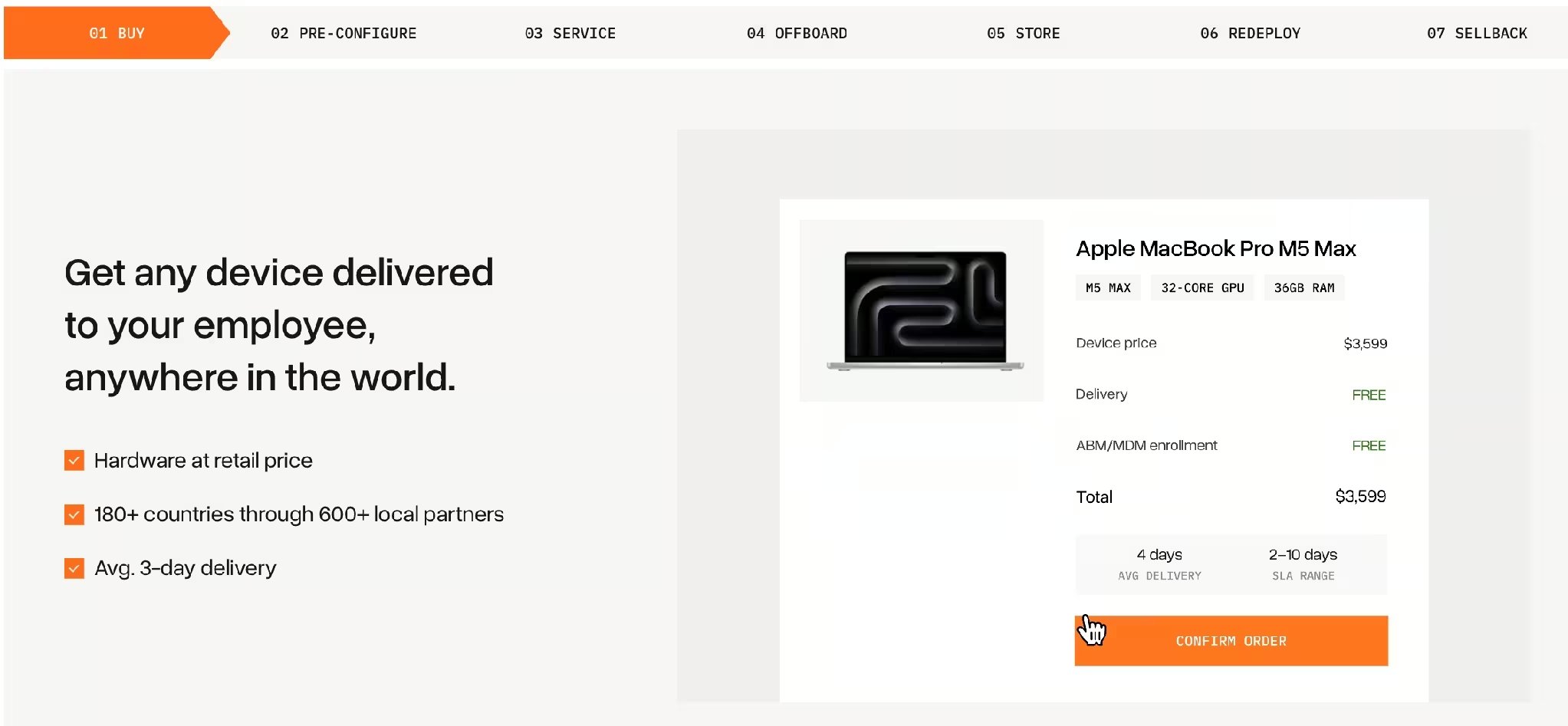
- Teams hiring across borders split the work differently: buy, pre-configure, service, offboard, store, redeploy, sellback. The last three are separate jobs.
- Reuse beats repurchase on carbon and on cash. Production accounts for roughly 70% to 80% of a laptop's life cycle emissions, per Fraunhofer IZM.
Device lifecycle management is how a company buys, configures, maintains, recovers and retires the devices its employees work on. Done properly it leaves one record per device and one named owner for every handover. The pressure on it is rising: Gartner's February 2026 forecast expects PC lifetime to increase 15% for business buyers by the end of 2026. This guide covers the standard model, the seven stages, four sourcing options and the questions to ask a partner.
What Device Lifecycle Management Is
Device lifecycle management (DLM) moves each device a company issues through every stage of its working life, from the purchase decision to the day it is wiped and sold or recycled. It covers laptops, monitors, phones and peripherals, and the unit of management is one device with one owner, one location and one record.
IT asset management is the wider discipline DLM sits inside. ISO/IEC JTC 1/SC 7, the committee behind the ITAM standards, defines it as "all of the infrastructure and processes necessary for the effective management, control and protection of IT assets within an organization throughout all stages of the life cycle" on its ITAM standards page. ITAM also covers software licences and cloud services, so DLM is its physical half.
Mobile device management is narrower again. An MDM enrols a device, applies policy and can lock or wipe it over the network. Physical work sits outside it: nobody at an MDM vendor books a courier or collects a laptop from a leaver's flat in Lisbon.
The distributed-team angle: most guides describe a five-stage model built for one office and one storeroom. Once employees sit in ten countries, storing, redeploying and reselling become three jobs with separate partners and timelines.
The Standard Model and the Operational Split
The formal model sits in ISO/IEC TS 19770-10:2025, the ITAM implementation guidance published in June 2025. It names seven life cycle processes: specification, development, acquisition, release, deployment, operation and retirement. Alongside them it lists eight cross-cutting functional processes, including data management, licence management, security management and financial management.
The requirements standard is ISO/IEC 19770-1:2017, which sets out 15 ITAM process areas and three implementation tiers. It is written for joint implementation with ISO/IEC 27001, which is why device records and security controls tend to be audited together.
The seven stages used below are an operational split of that work, and they are not the standard's names for it. They describe how the jobs divide when devices are bought, held and reused in several countries.
The mapping matters at audit time, because an auditor treats retirement as one process while your team runs four workflows inside it. Process names above come from the ISO/IEC TS 19770-10:2025 abstract.
Why Device Lifecycle Management Matters
Cost
Hardware is about to get more expensive. Gartner's February 2026 press release forecasts a 130% surge in combined DRAM and SSD prices by the end of 2026, PC prices up 17% and shipments down 10.4%. It names the consequence for IT: "These delayed upgrades will further raise concerns over increased security vulnerabilities and challenges of managing older devices."
Security
A device leaving your control is a counted breach pattern. Verizon's 2025 Data Breach Investigations Report records 149 Lost and Stolen Assets incidents, 122 with confirmed data disclosure, out of 22,052 analysed. Internal actors account for 73% of breaches in that pattern, and IBM's 2026 breach report puts the global average breach at USD 4.99 million.
What the Offboarding Numbers Actually Say
One statistic dominates this topic and gets misquoted almost every time. In Capterra's offboarding survey of 287 HR staff, 71% of those who offboarded someone in the past year said at least one leaver kept company equipment. That counts employers burned at least once, and says nothing about what share of devices come back.
A company with 200 leavers and one missing laptop sits inside that 71%. No published dataset gives a device loss rate or a returns benchmark, so read any vendor percentage as that vendor's own tracked number. The survey does hold usable figures: $1,963 of equipment per incident, and 59% of affected companies saying the device held sensitive data.
Compliance and Waste
Disposal is regulated. Under the EU's WEEE Directive, producers must finance collection, treatment, recovery and disposal of equipment sold to business users from 13 August 2005, and the annual collection target rose to 65% of equipment placed on the market from 2019, per the EUR-Lex summary. UNITAR's Global E-waste Monitor 2024 counted a record 62 million tonnes of e-waste in 2022, with 22.3% documented as properly recycled.
The Seven Stages of Device Lifecycle Management in Practice
Each stage has its own owner, its own cost and its own failure mode. Store, redeploy and sellback stay separate rather than folded into retirement because they need different things: a monitored facility, a re-enrolment workflow, and a buyer.
Buy
Procurement locks in most of the cost and most of the delay, making hardware lifecycle management an important consideration from the first purchasing decision. Two decisions carry the weight: whether you source centrally and ship or buy inside each employee's country, and whether the quote is recommended retail price or carries a margin. Compare the all-in cost per device per destination country, delivery and configuration included, because local sourcing also removes customs paperwork, duty and damage risk.
Pre-Configure
Configuration should be finished before the box is opened. Microsoft describes Windows Autopilot as "a collection of technologies used to set up and pre-configure new devices, getting them ready for productive use" in its Autopilot overview. Autopilot enrols the device into MDM with no custom image to ship, Apple Business Manager does the same for Mac, and removing the 90-minute setup call is the point of zero-touch deployment.
Service
Service is the longest stage: repairs, warranty claims, replacements, and keeping the record of who holds which asset current. A laptop that fails 4,000 miles from your nearest office either waits for a courier round trip or gets fixed by a partner in the same country.
The workflow to insist on: a replacement device that ships while the repair runs. Sending a laptop across a border clears customs twice before anyone opens it.
Offboard
Offboarding has two jobs: get equipment back from a terminated employee, and prove the data on it is gone. The trigger should be the exit recorded in your HRIS, and courier collection at the address with a tracked chain of custody turns a hopeful request into a dated record.
The wiping standard changed recently and most pages on this topic have not caught up. NIST defines media sanitization as "a process that renders access to target data on the media infeasible for a given level of effort", and NIST SP 800-88 Revision 2 superseded Revision 1 in September 2025. Revision 2 keeps the three methods Clear, Purge and Destroy, so a process built on the older document stays sound while the citation on your certificate goes stale.
Revision 1 is where the sample Certificate of Sanitization form sits, in Appendix G. IEEE 2883-2022 is the parallel standard for sanitizing storage, and IEEE 2883.1-2025 recommends how to apply those methods "before reuse, resale, or disposal". Ask any partner which document their certificate names.
Store
Storage is its own stage because a recovered device rarely has its next user waiting. Hiring is uneven by country, so a laptop collected in Warsaw in March may have no Polish starter until May. The requirements are a secure, insured, monitored facility, an asset record per serial number, and a monthly per-device rate you can forecast.
Redeploy
Redeployment is the highest-value stage most companies skip. A stored laptop is already paid for, and its carbon is already spent: Fraunhofer IZM puts production at roughly 70% to 80% of a laptop's life cycle emissions, and Apple's M4 MacBook Air report puts production at 71% of a 155 kg CO2e total, against 25% for the whole use phase.
Reuse savings vary by method, so read single figures carefully. France's environment agency ADEME found that buying refurbished avoids 43% to 97% of annual environmental impact, depending on refurbisher practice.
The operational requirement: wiped, tested, charged, re-enrolled in MDM and boxed before it ships onward. A device that arrives at 12% battery, still bound to the last user's account, costs more trust than it saves money.
Sellback
Sellback closes the loop in cash. A device that cannot be redeployed still holds residual value, and most companies write it off by leaving machines in a cupboard. Treat the resale percentages that circulate online with suspicion: they come from vendor pages that disclose no method and no sample, so your own quotes are the only reliable measure.
Two mechanics matter. The wipe has to be certified before the device leaves your control, and the money should arrive as cash rather than vendor credit nobody spends. A device buyback route works only while a machine still has a buyer.
Pro tip: audit your last ten leavers before you change anything. For each one, write down four dates: the exit in the HRIS, the collection booking, the day the device reached somewhere you control, and the day the wipe certificate was filed. Blank cells show which handover has no owner, and the gap between the first and third date is your real collection time.
How to Choose a Device Lifecycle Management Approach
In-House IT
Internal IT buys from consumer sites, ships from the office and tracks devices in a spreadsheet. This works to roughly 30 people in one country, and it breaks at the first hire in a country with no office.
Country-by-Country Vendors
One reseller per country solves delivery and creates administration: ten contracts, ten invoice formats, ten support paths. Teams typically live here between 50 and 150 people, and the recurring problem is reconciliation, because no system holds a single record of what sits where.
Global Lifecycle Platforms
A platform category exists for this problem, and device lifecycle management software such as Firstbase, Workwize, GroWrk and Deel IT are among the names you will meet. They consolidate vendors into one contract and one dashboard. What separates them is where devices are sourced, how hardware is priced, and what the platform fee does as the fleet grows.
Compare approaches to laptop lifecycle management before choosing.
Global Platforms With Local Partners
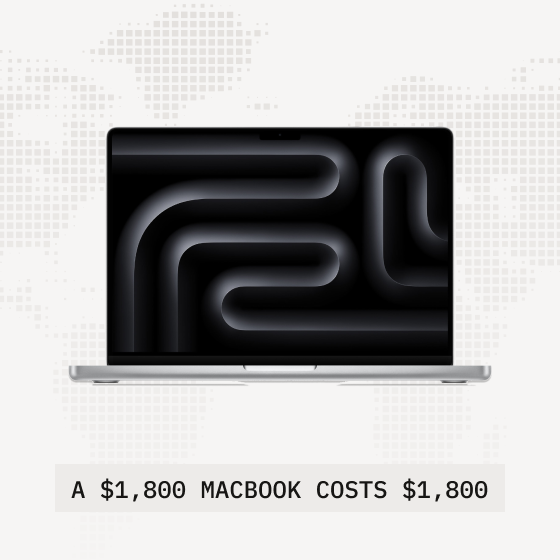
The variant worth understanding sources every order from an authorised reseller inside the employee's own country, so nothing crosses a border and hardware stays at local retail price, even when teams buy laptops in bulk. It is the only model that makes store and redeploy work country by country, with remote equipment management tooling keeping one record across them.
What to Look For in a Device Lifecycle Management Partner
Question 1: How Is Hardware Priced?
Ask for the recommended retail price and the invoiced price on one named configuration in one named country. Bulk-discount language often covers a margin on the device, and a fee that scales per seat changes the total again as you hire.
Question 2: Which Countries Do You Cover Directly?
Supporting 180 countries and having a local partner in 180 countries are different claims. The first often means a cross-border shipment from a hub, so ask which of your five biggest hiring countries has a partner inside it.
Question 3: What Share of Devices Arrive Before the Start Date?
An average transit time hides the misses that hurt. Ask for the proportion arriving ahead of an employee's first day, with the measurement window stated. Many vendors do not publish it, which is itself an answer.
Question 4: What Happens at Offboarding?
Ask what triggers collection, how often an unresponsive leaver gets chased and by whom, and which sanitization standard the certificate names. Since no independent benchmark exists for returns, any figure quoted to you is a vendor's own number.
How Tequipy Runs the Seven Stages
Tequipy runs the seven stages as separate priced services on one platform: buy, pre-configure, service, offboard, store, redeploy and sellback. Orders are fulfilled by one of 600+ authorised local resellers across 180+ countries, at recommended retail price with delivery included, per its global IT procurement page. Delivery averages 3 business days with a 10-day cap.
Devices are registered to your Apple Business Manager or Windows Autopilot tenant before shipping, so your MDM claims them on first boot. Tequipy is not an MDM itself, and integration runs through ABM and Autopilot rather than a direct Jamf or Intune connection
Every rate above sits on the pricing page, which carries a calculator for your own fleet.
The redeploy arithmetic is why that stage deserves staffing. Collecting a device, holding it in storage for three months and redeploying it to the next hire costs about $180 to $240 on those rates, against $1,500 to $2,500 to buy that person a new laptop. The saving repeats every time the loop closes.
Two published customer results carry the collection figure. RemoFirst got back 100% of company-issued devices across 30 countries, saving $3,500 a month, and TapTap Send reports the same 100% figure with $6,500 in average monthly savings. Both are Tequipy's own tracked figures for those accounts.
Booksy saved 3,200+ hours of IT administration, with 99% of devices arriving before the start date, and Gigs handed over 100+ hours a month of logistics work instead of hiring for it.
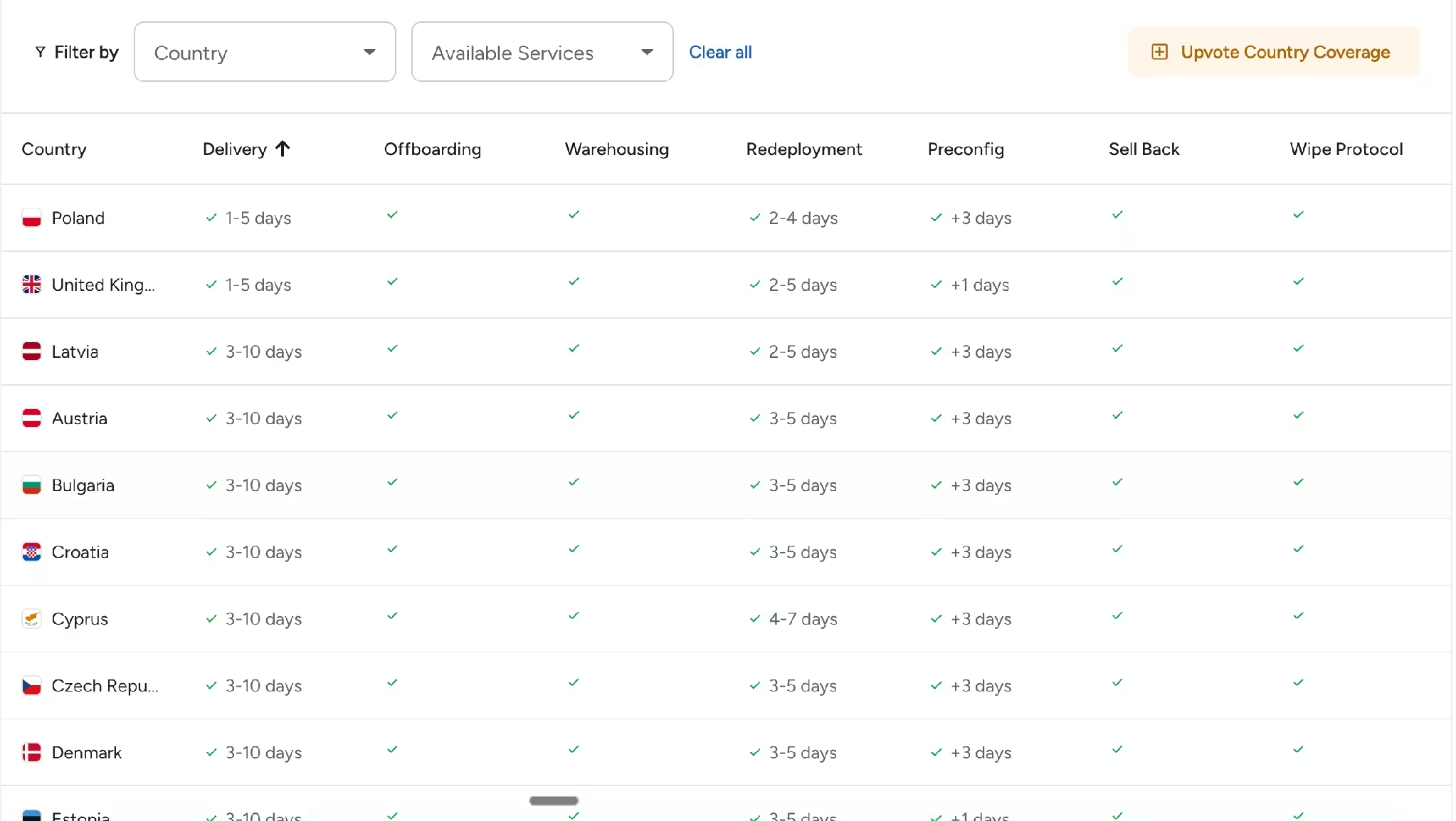
Security posture decides how offboard and sellback survive an audit. ISO 27001 is held, hosting sits in Europe under GDPR, and every device carries a chain of custody. SOC 2 is in progress, so check where it stands if a certificate gates your purchase. At offboarding you choose a basic wipe, a Blancco certified wipe, a certificate of destruction, or no wipe under legal hold.
Two limits belong in any shortlist. Only new devices are sold, and cross-border movement runs inside the European Economic Area alone, so elsewhere a device is stored and redeployed in the country where it was collected. The $5,000 credit line is payment timing, and hardware is never leased, financed or rented.
{{cta-primary}}
CONCLUSION
Own Every Stage of the Device Lifecycle
Device lifecycle management is won or lost at the handovers: purchase to MDM tenant, configured device to new hire, HRIS exit to a courier at the door, stored device to the next employee. Pick the handover that failed most often this year, give it one owner and one record, then measure it for a quarter. Where distance is the obstacle, the Tequipy team can run the physical stages in your hiring countries.
FAQ
What Are the Stages of Device Lifecycle Management?
Seven, in the international standard: specification, development, acquisition, release, deployment, operation and retirement, per ISO/IEC TS 19770-10:2025. Distributed teams usually run the same work as buy, pre-configure, service, offboard, store, redeploy and sellback.
What Is the Difference Between DLM and ITAM?
ITAM is wider. It records hardware, software licences and cloud subscriptions in one register. Device lifecycle management is the operational work on the physical devices inside that register, from buying and configuring to collecting, storing and reselling.
How Long Is the Typical Device Lifecycle for a Company Laptop?
Four to five years of first life for a PC, per ADEME. Apple's carbon model assumes four years for macOS devices, and Gartner expects business PC lifetime to rise a further 15% by the end of 2026.
Which Standard Covers Wiping a Device at the End of Its Life?
NIST SP 800-88 Revision 2, published in September 2025, which superseded Revision 1 from 2014. It keeps the Clear, Purge and Destroy methods. IEEE 2883-2022 covers sanitizing storage before reuse, resale or disposal.
Can Device Lifecycle Management Be Outsourced?
Yes. A lifecycle platform performs the physical stages in each country while your MDM and asset register hold the software and the records. Tequipy runs all seven stages across 180+ countries, priced per service.
Keep your current setup.
Just test us on one order.
AUTHOR
Before Tequipy, Tomek ran IT at Revolut, scaling from 100 employees in 2 offices to 5,000 across 17. He built the system that kept every laptop accounted for, then founded Tequipy – a platform that handles IT equipment logistics for distributed teams across 180+ countries.
As CEO, he runs operations and covers the founder layer: strategy, product, and the company-building that comes with both.
15 minutes. Your countries, your devices, your setup. No pitch.